Stewardship
The organizations that can afford Masters help make it available to those that cannot.
Stewardship is part of how Masters operates, not a marketing campaign attached to it. Commercial success is meant to widen access to the same professional standard — without lowering that standard for the institutions that receive sponsored work.
Governed, not sentimental The enterprise chooses the cause Same standard, different scope
The core idea
Same standard. Scope defined by need.
A qualifying commercial engagement can fund independent diagnosis and help for an institution that could not otherwise afford it. The sponsored institution receives the same professional standard Masters applies to paying clients.
Scope may differ because the institution's actual need differs. Standard does not.
Sponsored work is not a discounted, lower-effort version of the practice. It is the same discipline applied to a genuine need, staffed to the same admission standard, and held to the same evidence requirements.
Compounding, not charity theater
Most enterprises already care about something concrete.
They already fund a food bank, a clinic, a watershed, a workforce program, a school. What those commitments rarely receive is institutional capability — the same diagnosis, architecture, and implementation discipline the enterprise buys for itself.
Masters does not ask an enterprise to adopt a new cause. It applies professional capability to a commitment the enterprise already holds, so that commitment can compound instead of resetting each budget cycle.
- 01
The enterprise chooses
An existing community, environmental, workforce, health, food-access, water, conservation, education, or other goodwill initiative — or a cause and geography. Masters does not impose a cause.
- 02
The recipient keeps agency
The sponsored institution retains its own judgment. The paying enterprise does not get to manufacture a publicity project unrelated to the recipient's actual need.
- 03
Scope follows the diagnosis
What the recipient needs is established by independent diagnosis, not by what would photograph well.
How it works
From a commercial engagement to sponsored help.
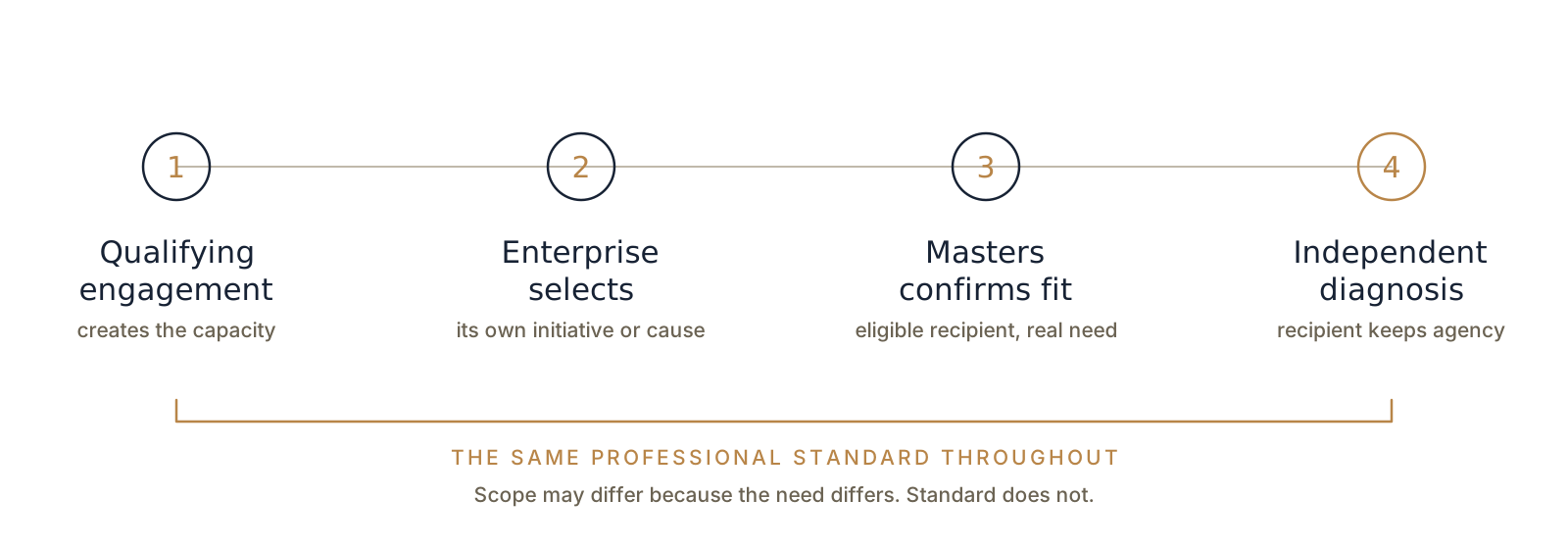
Truth boundary
What this page does not claim.
Masters is not promising a literal financial one-for-one formula. The exact accounting, eligibility, and capacity rules are being finalized with appropriate legal and accounting review, and this page will not assert a precise ratio before those rules exist.
Masters also does not publish a running counter of impacts that have not yet occurred.
Where outcomes are reported, they favor evidence of real function over intervention counts — not merely “trees planted” but survival, stewardship, and intended ecological or community function; not merely “water system installed” but reliable potable-water access, maintenance ownership, quality verification, and continued operation.
Interested?
Strengthen a cause you already care about through the work itself.
If your organization is considering a commercial engagement and would like it to extend the same professional standard to an institution that could not otherwise access it, start the conversation and name the initiative you want to strengthen.