Sixteen organizations, assessed one at a time
Business SWOT and positioning across platform, security, governance, data, and consultancy substitutes.
Observed 2026‑09‑02 · standing conclusion: no end-to-end substitute demonstrated
Management & technology consulting
Organizations are committing capital, data, and authority to technology that changes faster than the institution can absorb it. Masters starts with the institution and the business problem—not the product category—and stays independent of the answer until the evidence points to one.
Independent of the answer Evidence carries its date A report worth keeping
The thesis
We look for the operating system beneath the symptom: how decisions are made, how work moves, how people develop capability, where information breaks, what the technology is actually doing, and what the economics genuinely justify.
A technology can be impressive and still be the wrong intervention. So the first question is never which product to buy. It is what the institution is trying to accomplish, and what the smallest reliable system that accomplishes it looks like.
Read the consulting approachGoverned Institutional Intelligence active Masters research
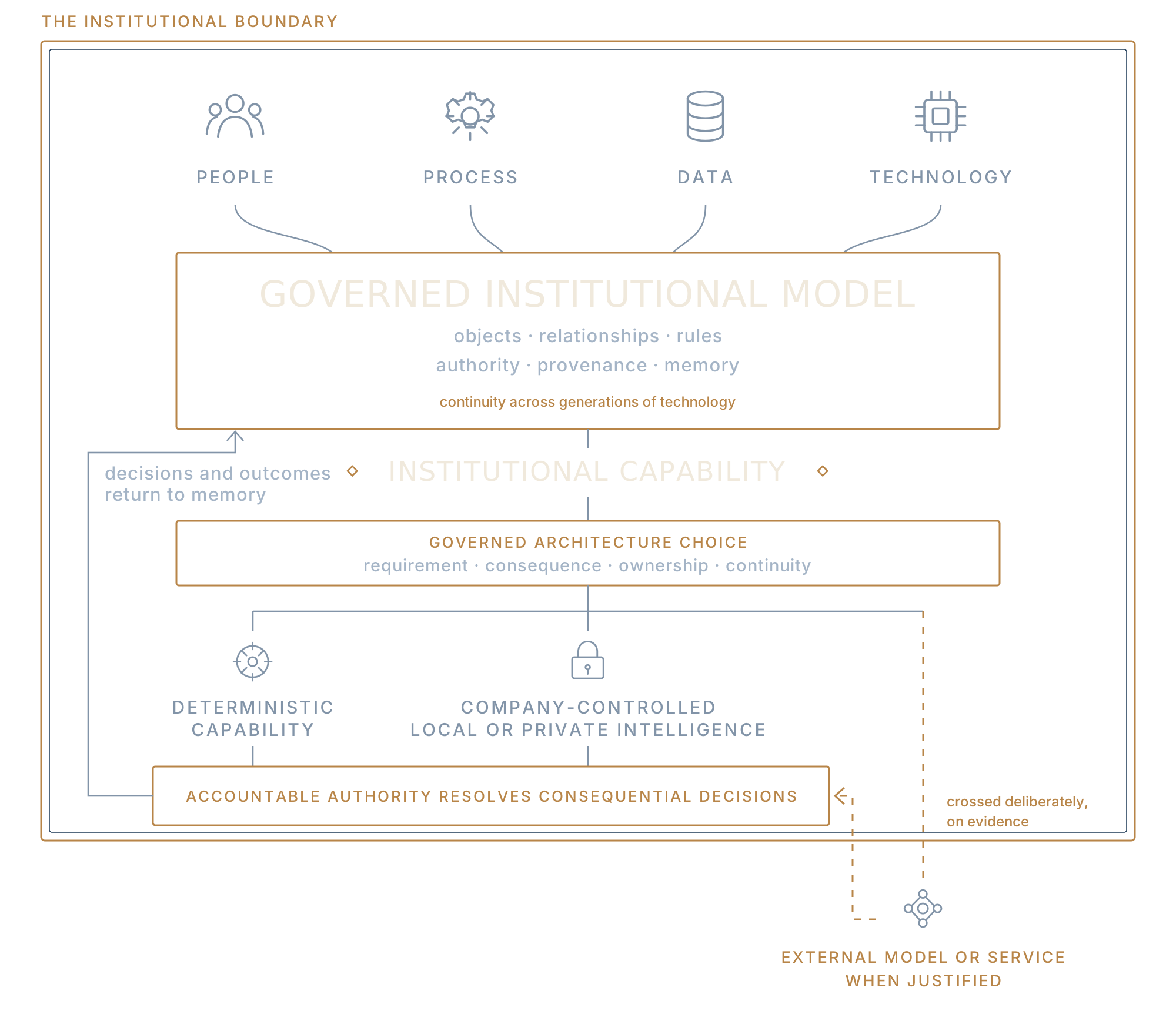
AI should strengthen what the institution knows, remembers, governs, and can continue — not quietly become the place where those capabilities live.
The thesis
Organizations accumulate intelligence across people, procedures, systems, decisions, data, relationships, and institutional memory. AI can help those capabilities compound. But an institution should not make its continuity dependent on one model, one vendor, one employee, or one technology generation.
So the institution needs a governed model of itself: what exists, how things relate, what rules apply, who holds authority, what happened, what changed, and what must remain portable and under institutional control.
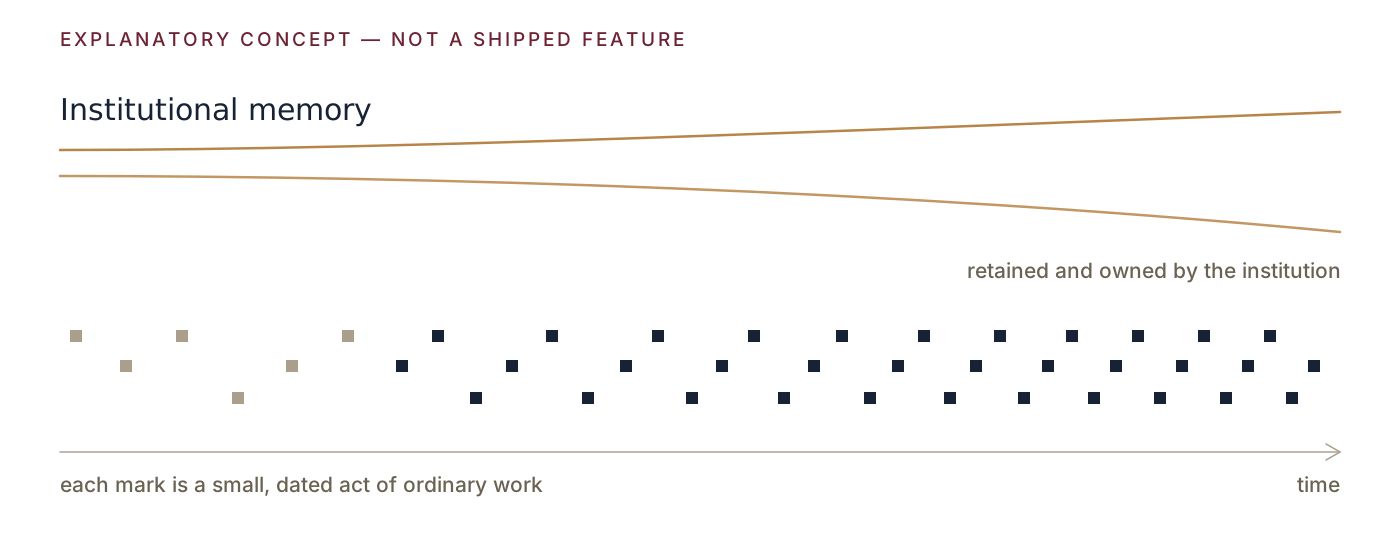
What the organization has learned and decided, retained beyond any individual tenure, vendor contract, or tool.
An ontology of the institution: the objects, relationships, and rules it recognizes as its own, written down rather than assumed.
Who may decide what, and where every consequential claim came from — so a conclusion can be inspected and challenged.
Ordinary work treated as a small, dated act of stewardship that accrues to the institution rather than evaporating.
The institution keeps operating when a provider changes behavior, price, or availability — degrading gracefully instead of failing silently.
Capability that compounds across technology generations instead of resetting with each one.
Governed Institutional Intelligence is an active Masters research thesis, not a validated commercial offering. We publish it because the question matters and because we would rather be inspected than believed. Where the evidence is not yet there, we say so.
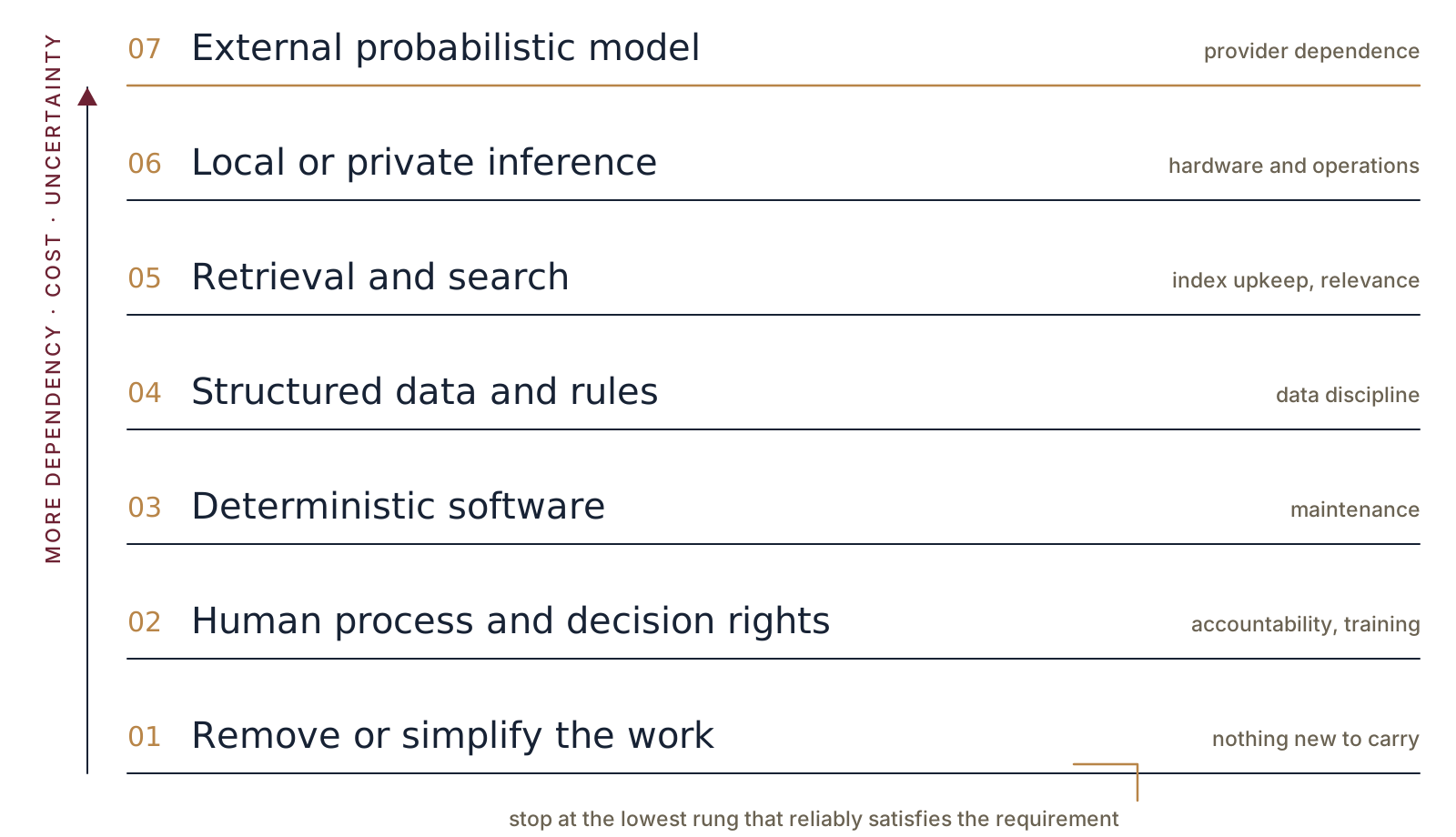
Masters does not begin an AI engagement by choosing a provider or assuming a model belongs in the final system. We decompose the business requirement first and assign each part of the workload to the simplest architecture that can perform it reliably.
The objective is a governed system with explicit provenance, authority, evaluation, failure behavior, and operating economics — not the maximum possible number of model calls.
Explore AI Systems & AutomationThe Masters Guide
The Guide is a decision instrument, not a lead form and not a chatbot. It builds a structured model of your problem before it looks for technology, then matches that model against dated, provenance-preserving evidence.
Every material claim carries its source and the date it was observed. Each report records the evidence snapshot it was generated from, so it does not quietly change when the market does.
Specimen — illustrative
Governed model access → deterministic software. Routing, key management and cost attribution is control-plane work, even when the models behind it are probabilistic.
Auditability → structured data and rules. An audit trail is append-only evidence, not a generative task.
Sensitive-data protection → no new system. Your current estate appears to already provide this.
2026‑09‑02 — “A gateway can make traffic authenticated, cheaper, observable, governed, and resilient without proving that the traffic — or the centralized control point — should exist.” Masters competitive positioning audit
No-buy path. Extend the platform you already own. Resolving one unknown could remove the purchase entirely.
The problem beneath the problem
An institution can purchase short-term efficiency by outsourcing the very work through which its own people used to become capable. We call that capability liquidation. It is our explanatory language for a risk we are actively studying — not a measured finding.

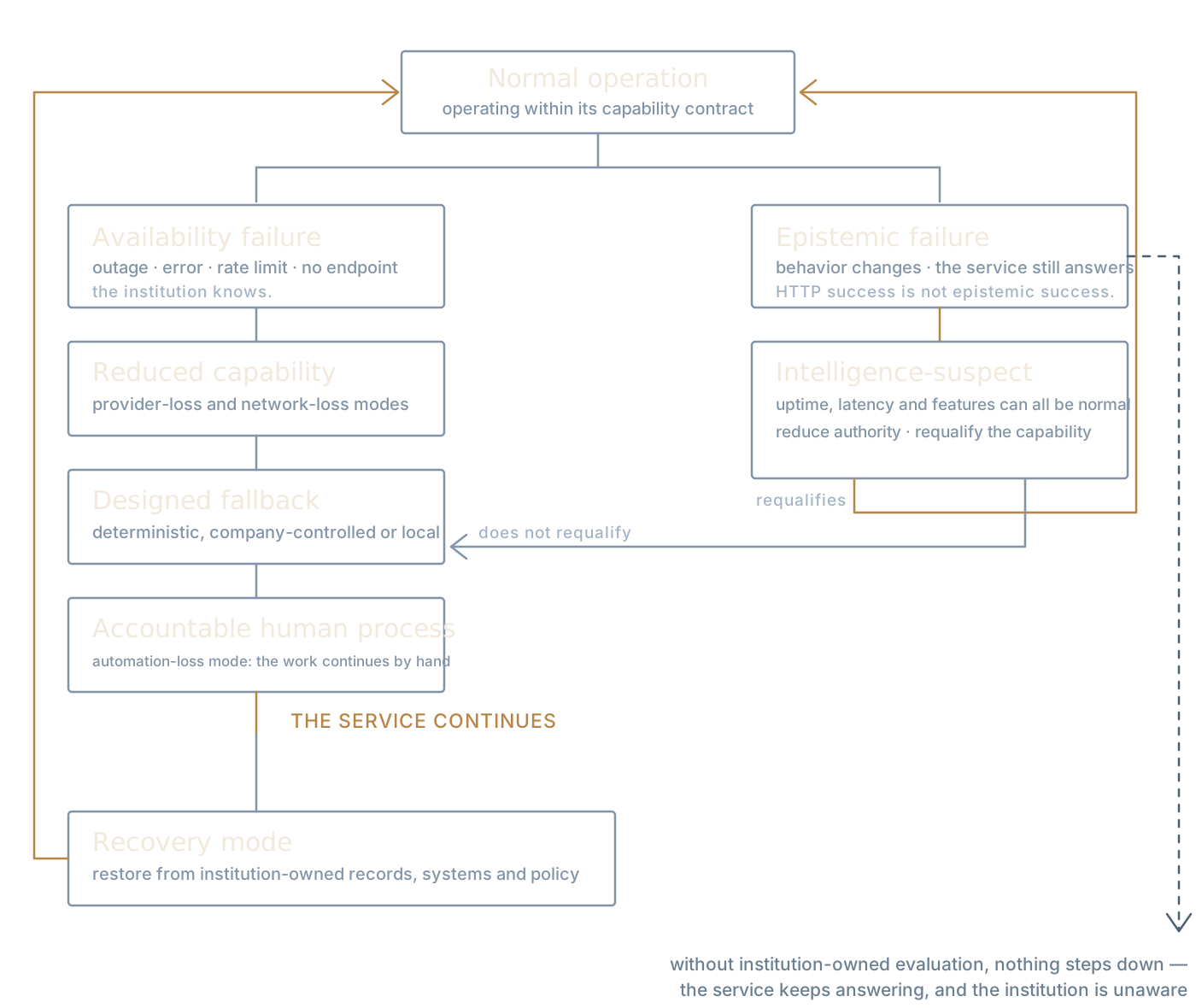
Consequential systems are rarely changed while an institution is idle; they are changed while it is awake and operating. We use slow brain surgery as memorable explanatory language for that condition, not as a technical claim.
Explore Continuous Capability SystemsPractices
Practice 04
Deterministic-first decomposition, governed hybrid architecture, local and edge AI, bounded model use, authority boundaries, provenance, evaluation, privacy, continuity, and operating-cost discipline.
The review can conclude that a model is essential, useful only for a narrow component, replaceable with local inference, or unnecessary — and that conventional software or process redesign is the better intervention.
Read the practiceObjectives, alternatives, operating analysis, prioritization, and decision architecture.
Workflow mapping, bottleneck analysis, standards, handoffs, controls, and operating redesign.
System requirements, integration choices, platform evaluation, and modernization planning.
Roles, decision rights, onboarding, performance evidence, knowledge transfer, and continuity.
Requirements, plans, operating artifacts, governance, measurement, and sustained execution.

The Masters standard
The name encodes a staffing principle: professionals representing Masters should hold master's-level or higher education relevant to their domain. The degree is the academic floor — demonstrated capability, judgment, integrity, and communication determine admission.
Masters recruits continuously, but applying is not membership. Admission means the firm is willing to place its institutional reputation behind that person's judgment in the domain they represent.
How Masters selects expertsAn imperfect organization can be an excellent client when leadership genuinely wants to improve. Masters will decline work when helping an organization succeed would conflict with the standard of stewardship it is prepared to strengthen.
Read the client standardStewardship
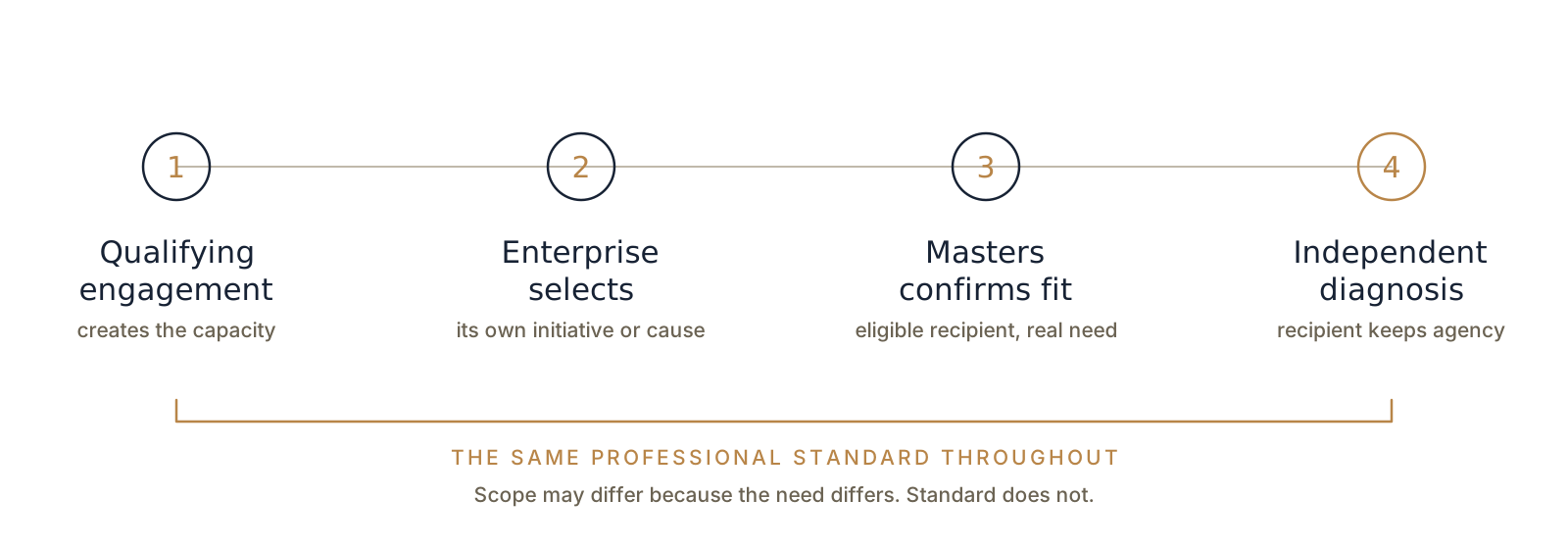
The paying enterprise chooses the initiative; Masters does not impose a cause. This page does not promise a literal one-for-one financial formula, and Masters does not publish a counter of impacts that have not yet occurred.
Read the stewardship modelResearch
Masters maintains dated, provenance-preserving evidence about vendors and architectures, publishes methodology and competitive analysis, and states uncertainty and negative results plainly.
Business SWOT and positioning across platform, security, governance, data, and consultancy substitutes.
Observed 2026‑09‑02 · standing conclusion: no end-to-end substitute demonstrated
Claim, source, observed date, maturity, confidence, interpretation, and what would cause reconsideration.
Bounded first corpus — not comprehensive market coverage
A research direction and a set of open questions about institutional memory, ownership, authority, and continuity.
Explicitly provisional — not a validated offering
Start here
Use the Guide for a transparent first report, or bring a consequential problem directly to Masters.